
An examination of the similarities of self-aware art and occult practices
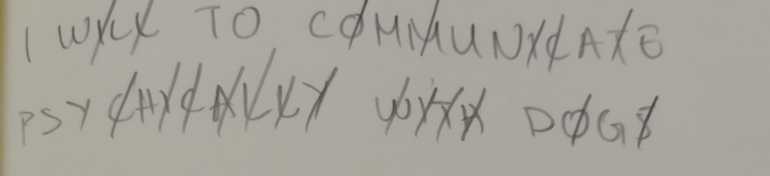
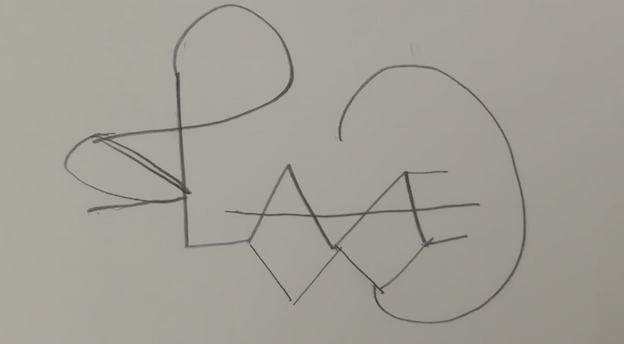
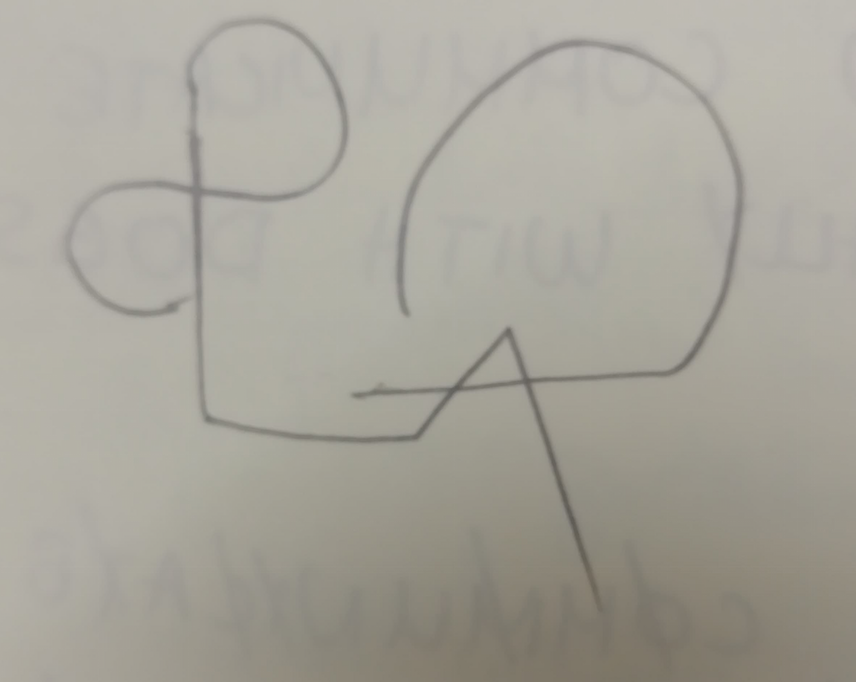
Performance is something which is always dependent on a context, this context being the venue, the audience, the social and economic purpose etc. In the latter half of the twentieth century we see many art forms that are more self-aware of their context, hence the creation of performance art – an artistic practice that has the questioning of a performance’s context as its core purpose and value. According to Patricia Waugh, this is a method of artistic creation that “self-consciously and systematically draws attention to its status as an artefact in order to pose questions about the relationship between fiction and reality”[1]. Examples of this are artworks such as Duchamp’s Fountain, John Cage’s 4’33 and many more. Specifically, in performance art the line between fiction and reality is at its thinnest and therefore performance artists can be seen as manipulators of reality. This manipulation is the conjuring of what Eldritch Priest calls Hyperstition, ‘a fiction that makes itself real by affective insinuation, by gut reactions that contaminate the nervous system with the intensity of nonbelief. Hyperstition is a pre-personal and unconsciously exercised conviction that cannot help but register as the reality of a situation’[2]. He continues by illuminating the similarities of the creation of hyperstition to the occult practice of Chaos Magick, which is a modern magical practice that doesn’t follow specific spiritual tradition. A chaos magician doesn’t necessarily believe in deities and spirits, but in human belief and expectation, therefore deeming chaos magick a ‘spin on reality’[3].
Performance artist are mostly viewed as lazy and non-artists; however, their training can be very complex. To manipulate reality in order to create a fiction is a very delicate procedure. According to the artist Marina Abramovich, what a person needs in order to make a performance art work successful is a sense of nowness that, according to her, creates a type of energy. The artist can be doing the most every day action in the most every day space, but what makes the performance is his/her radiant energy/presence that seeps into the space. This is what makes up for the non-existent (physical) stage and crowns the persons actions as a performance. This energy/presence is an animalistic, immanent quality that exists in all people and can be accessed by means of meditative methods. In her ultimate work The Artist is Present, Abramovich sat on a chair for eight hours a day, for three months and just stared the person that sat in the chair opposite her in the eyes. This work was a clear exposition of this shaman-like energy.
The words immanent and animalistic are reminiscent of Bataille’s Theory of Religion, in which he talks about imminent and transcendent violence. Transcendence in this case is seen as the human’s transcendence from the animalistic natural order, to the order of things. In the order of things, humans believe they can see the world from a perspective as if they are outside it and have given objects utility, therefore making them into things that have a use in the future. Transcendence hereafter is something that creates duration, everything is done for a future purpose – we go to school to study, we study to be employed, we need employance to live and so on. This creates a never-ending cycle of utility. Animals, on the other hand, do not act for the future, they act for the moment and that’s why they are immanent. Immanence, for Bataille, comes hand in hand with intimacy. Intimacy in the sense that there is no hierarchy or differentiation between animals, they are ‘like water in water’[4]. He gives the example of one animal eating another, in which case ‘there is no transcendence between the eater and the eaten; there is a difference, of course, but this animal that eats the other cannot confront it in an affirmation of that difference’[5]. This is immanent/intimate violence, whereas transcendent violence is based on a constructed hierarchy or a strive for the possession of an object of durational utility – I can torture you because you are my slave – we kill to get money or fame – we fight for land.
Humans according to Bataille still get glimpses of this imminence in sexual and sacrificial acts where the overflow of energy and the objects of utility are wasted. Sacrifice is an anti-utility act. Maybe this is what Abramovich strives for? The return of the performer to absolute presence through ‘wasting’ time through meditation. This immanence gives the performer a conviction because he/she loses all inhibitions that come through rationalism and reflective thought, which are acts of duration. It’s quite ironic that art that is so self-aware in its form wants to completely get rid of any reflection in the moment. It’s as if the form and the technique needed for the preparation is acquired through what us humans have conditioned ourselves to do, to reflect, but the actual performance is a complete striping away from that. Maybe people really enjoy seeing animals perform in the circus because they are unpredictable, and maybe that is what they want the performer to be – an unpredictable present animal. Maybe, therefore, we can call the relationship between a controlling composer and a performer sadistic. Because the transcendent composer violently expects the performer/animal to do exactly as he/she is told.
In sacrifice, by wasting the utility of an object, the object returns to the immanent, where objects become spirits that coexist in a non-hierarchical homogenous world[6]. This is exactly what Genesis P-Orridge and Lady Jae (Jacqueline Breyer) did when they started the project of the Pandrogyne. The Pandrogyny project was a durational performance in which the two lovers started by sacrificing their individual identities and creating one pandrogenous being/spirit called Breyer P-Orridge. The procedure of submergence involved them getting plastic surgery to look as similar as possible. Genesis, years after the death of Lady Jae stated: “We started out, because we were so crazy in love, just wanting to eat each other up, to become each other and become one. And as we did that, we started to see that it was affecting us in ways that we didn’t expect. Really, we were just two parts of one whole; the pandrogyne was the whole and we were each other’s other half”[7].
One could say that the pandrogeny project was such an extreme attempt to prove its point, but so are so many other works of art. I believe that Abramovic and P-Orridge would agree with Bataille’s and Foucault’s definitions of limit experiences, where divine ecstasy is also extreme horror[8]. Limit experience, according to Foucault, is “the point of life which lies as close as possible to the impossibility of living, which lies at the limit or the extreme”[9]. These experiences are also where man is closer to spirit because he is closer to death.
Many artists have played with this idea of near-death danger. One of them is Franko B in his Work I Miss You, where he walked naked down a catwalk with cannulas in his elbows, leaving a trail of his blood behind him. Franko states that his body in this work represents “the sacred, the beautiful, the untouchable, the unspeakable, and for the pain, the loss, the shame, the power and the fears of the human condition” (as cited at tate.org.uk, publications, Franko B I miss you, 2015)[10]. It is a work that perfectly reflects on the animalistic intimacy that Bataille writes about, but it also is a work of extreme horror and extreme transgression that forces the audience to be present. Apart from that its extreme transgression places the audience in a position where they are to decide if they are going to deny, neutralize and then accept or just plainly accept this transgressive act for what it is. The acceptance of it leads to the demolition of many taboos and constructed ideas of beauty and socially accepted behavior, and this is one of the main purposes of this type of art. Franko B’s performance can easily be compared to a Horror film in terms of audience experience, and as Henry Jenkins has said: “The best artists working in the horror genre don’t just want to provoke horror and revulsion, they want to slowly reshape our sensibilities so that we come to look at the most outré images as aesthetically pleasing and erotically desirable”[11]. However, for the performer this extremity, apart from an exciting experiment, is also a way of achieving a ’superhuman’ type presence. Even in more mainstream musical cultures like 60s rock and roll we see the use of limit experience as a means for the transcendence of human transcendence – which is the return to animality. Sex, drugs and rock n’ roll is an attempt to reach an altered consciousness, a phenomenon which is commonly seen in many shamanic practices across the globe.
Returning to the pandrogyne, Genesis P-Orridge has also stated “we wanted a word without any history or any connections with things – a word with its own story and its own information”[12]. This makes a lot of sense if one applies the register theory by French philosopher and psychoanalyst Jacques Lacan. He divides reality into three registers: the imaginary, the symbolic and the real – the imaginary being the internal register of images and dreams where one imagines one’s self in between others, the symbolic being the register that is completely constructed of the way we communicate our ideas through speech, images and symbols (the linguistic field), and the real -what something actually is beyond its formal symbolization and phenomenal appearance – which we can never quite grasp. Lacan states that we are born in a pre-existing symbolical order[13], because the symbols of the culture we are born in are already there. The symbolical order is something that we can never really escape because we can only communicate and think in words. Bataille also uses the term real order (or real order of things) but it is important to clarify that it is very different to the Lacanian Real. If we draw a comparison between the two theories, we can see that the real order in theory of religion is closer to the Lacanian symbolic register, because it is an anti-intimate register of words and therefore human transcendence, whereas the Lacanian Real is closer to immanence – it is something that we cannot quite understand rationally with words.
By creating new words, like pandrogyne, we do not escape the symbolic order, but we do escape what could be the rhetoric of a culture that has a complex and heavy backdrop. And maybe this is what self-aware art does, it questions this rhetoric by transgression and creates new symbols of chaos and nonsense – symbols that can only have a vague interpretation, that leave logical gaps – symbols that because of their non-sense break, even momentarily, the world of utility. Empirically, one can say that these are the gaps in linear reality where one can be manipulated by the artists, but if one is more analytical and bears in mind the theories that I have posited one can say that; these gaps are like poetry, their nonsense breaks utility and returns us to the mythical order of spirits and in them we get a glimpse of our long lost animality. ‘The animal opens before me a depth that attracts me and is familiar to me. In a sense, I know this depth: it is my own. It is also that which is farthest removed from me. That which deserves the name depth, which means precisely that which is unfathomable to me. But this too is poetry…’[14]
Bibliography
- Priest, Eldritch: Boring Formless Nonsense, Experimental Music and the Aesthetics of Failure, Bloomsbury, USA, 2013
- Abramovic, Marina: Walk through Walls: A Memoir, Penguin (first edition), 2017
- Zizek, Slavoj: How to read Lacan, Granta Books, London 2006
- Bataille, Georges: Theory of Religion, Zone Books, New York 1989
- Biles, Jeremy: Ecce Monstrum, Fordham University Press, New York, 2007
- Waugh, Patricia: Metafiction: The Theory and Practice of Self-Conscious Fiction (New Accents), Rootledge, 1984, Great Britain
- Digital Culture: Jacques Lacan – Register theory, posted on February 12, 2017 by rdegon, first visited 11/1/2019, link: https://digitalculture2017blog.wordpress.com/2017/02/13/jacques-lacan-register-theory/
- Jenkins, Henry: The Wow Climax: Tracing the emotional impact of Popular Culture, NYU Press, New York, 2007
- Gormley, Clare: Performance at Tate: Into the space of art: Franko B – I miss you, 2015, tate.org.uk, first visited 11/1/2019, Full link: https://www.tate.org.uk/research/publications/performance-at-tate/case-studies/franko-b#footnote2_qz5uyw0
- Heathfield, Adrian: Live: Art and Performance, London 2004, p218 – 228
- Musto, Michael: Genesis P-Orridge on pandrogeny and surgery, The village voice, 7 March 2012, Village Voice LLC., first accessed 12/1/2019, full link: https://www.villagevoice.com/2012/03/07/Michael-Musto-Genesis-Lady-Jaye/
- Powers, Nicole: Genesis P-Orridge – The body Politic, thesuicidegirls.org, December 23 2008, first accessed 12/1/2019, full link: https://www.suicidegirls.com/girls/nicole_powers/blog/2680078/genesis-p-orridge-the-body-politic/
- Abramovic, Marina: An art made of trust, vulnerability and connection, TED talks, November 2015, accessed 16/1/2019, full link: https://www.ted.com/speakers/marina_abramovic
[1] Priest: Boring formless nonsense, 201 (as sited in Waugh: Metafiction, 2)
[2] Priest: Boring formless nonsense, 201
[3] Priest: Boring formless nonsense, 233
[4] Bataille: Thoery of Religion, 19
[5] Bataille: Theory of Religion, 17 -18
[6] Bataille: Theory of Religion, 37
[7] The Suicide Girls: Genesis P-Orridge Body Politics
[8] Biles: Ecce Monstrum, 8
[9] Fouccault:The experience Book, 30 -31
[10] Heathfield: Live: Art and Performace, 218 – 228
[11] Jenkins: The Wow Climax, Matthew Barney
[12] Musto: The village Voice, Genesis P-Orridge on Pandrogyny and Surgery
[13] Digital Culture: Jacques Lacan – Register theory
[14] Bataille: Theory of Religion, 22



 Sigil Music